
Experts:

September 9, 2026
Introduction
The arts are, as Beverly Sills once observed, “the signature of civilizations.” Art institutions shape the character of their communities, anchoring civic identity, enriching public life, and providing residents with shared cultural experiences. At the same time, a vibrant arts and culture sector has tangible economic benefits. Research suggests that a robust arts ecosystem increases a region’s amenity value, making it more attractive to skilled and educated workers, which in turn supports broader economic growth and innovation. The arts, in other words, are not only a reflection of a community’s prosperity – they are also a contributor to it.
Arizona, for its part, has a mature and diverse arts sector, including a nationally recognized professional ballet (Ballet Arizona, established in 1986) and symphonies in both Phoenix and Tucson (established in 1947 and 1928, respectively), as well as significant downtown museums. But the state’s arts sector is not exclusive to its metro regions; in rural cities like Sedona, Prescot, Bisbee, and Tubac, the local arts and culture sector is anchored by longstanding galleries, artist cooperatives, and festivals, such as the Tlaquepaque Arts and Shopping village in Sedona and the Tubac Center of the Arts in Tubac.
This report reviews Arizona’s arts and culture landscape and benchmarks its arts environment against peer states and large metropolitan areas using publicly available data and metrics designed by CSI. Using econometric methods and the TaxPI+ model from Regional Economic Models, Inc. (REMI), we also attempt to quantify the sector’s contribution to economic output and evaluate how the continued vibrancy and growth of this sector can help drive the state economy forward.
Key Findings
Arizona has a diverse arts sector anchored by major institutions in its two major metro areas. Phoenix and Tucson are each home to symphony orchestras, ballet companies, and major visual arts museums that are complemented by large performing arts venues and a strong university-based education pipeline. Together, these institutions serve more than two million patrons annually.
Arizona’s arts sector has room to grow relative to its population. The state ranks 41st on the Arts Intensity Index, and 47th in arts nonprofits per capita, reflecting a younger institutional history compared to more established cultural hubs and presenting a clear opportunity for continued expansion.
Arizona has become much wealthier in a very short period of time, so has the capacity to support and grow its arts sector. Average annual household income grew from $68,103 (90% of the national average) in 2014 to $110,522 (97% of national average) in 2024, the latest year for which data is available.
Despite having a small arts and culture sector relative to the state’s population, Arizona’s arts sector is home to high-performing institutions and some of the fastest growth in the nation. Arizona ranks 7th nationally in revenue generated per arts nonprofit, and the Phoenix Metro ranks 11th among the 25 largest metros in the country on nonprofit performance. Economic data shows core arts value added in the state grew 123% from 2013-2023, the fifth fastest increase in the nation.
A stronger arts sector is associated with higher personal income growth. CSI estimates that a one percentage-point increase in the core arts sector’s share of GDP is linked to $1,700-$2,200 in additional per-capita income five years later.
In total, CSI estimates Arizona’s arts sector contributes $18.4 billion in total economic output in the state, translating to $11.5 billion in GDP, and supports more than 113,000 jobs across the state. Effectively, the arts sector accounts for 2.5% of the state’s economy either directly or indirectly.
Arts in Arizona
Arizona’s arts and culture sector is comprised of several keystone institutions, supported by a wide network of education and training infrastructure. The state’s two urban metros, Phoenix and Tucson, are each home to a symphony orchestra. The Tucson Symphony Orchestra, which was founded in 1929, is the oldest continuing professional performing arts organization in Arizona, and the oldest orchestra in the Southwest.
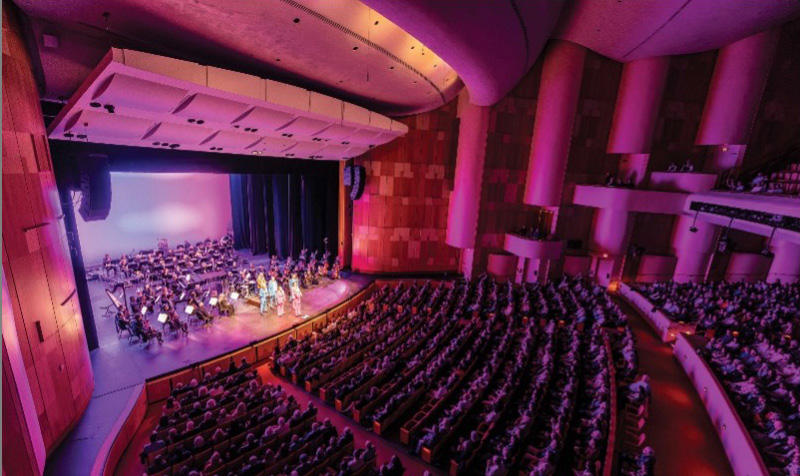
In the Phoenix metro, the Phoenix Symphony represents the state’s largest orchestral institution, reaching hundreds of thousands of residents annually through a mix of classical, contemporary, and community performances. Complementing the orchestral presence, Ballet Arizona serves as the state’s primary professional ballet company, with a performance and education footprint that extends across the state. Together, these institutions form the core of the state’s performing arts sector, offering consistent, year-round programming.
The valley’s jazz scene has been gaining particular traction over the past 14 years. The Nash, a nationally celebrated jazz club, and its John Dawson Center for Jazz Education have provided the area with premier performances and youth educational programming since 2012. In 2021, Ravenscroft brought additional life to this space with an ultra-modern performance venue that continues to excite its audiences with regular concerts and community events.
Arizona’s visual arts landscape is anchored by several major museums. The Phoenix Art Museum, the largest art museum in the state, houses a collection of more than 20,000 works and attracts significant annual visitation. Nearby, the Heard Museum provides a nationally recognized focus on Indigenous art and culture, drawing visitors through both exhibitions and large-scale annual events. In southern Arizona, the Tucson Museum of Art and Historic Block contribute a multi-building arts campus that combines gallery space with historic preservation.
Even outside the two major cities, one can find large-scale performing arts venues in Arizona. The Mesa Arts Center stands as one of the largest comprehensive arts campuses in the region, hosting performances, exhibitions, and arts education programs across multiple venues. Additional facilities such as ASU Gammage and the Herberger Theater Center support touring productions, theater companies, and community programming, reinforcing the state’s capacity to host a wide range of artistic activity.
Arizona’s arts ecosystem extends into many of its smaller and rural communities, where arts organizations often serve as both cultural anchors and drivers of tourism activity. Communities such as Sedona, Prescot, Bisbee, and Tubac have developed strong reputations as arts destinations, supported by galleries, artist cooperatives, festivals, and community performance spaces. In southern Arizona, the Tubac Center of the Arts has operated for decades as a regional hub for exhibitions, workshops, youth programming, and performing arts events, serving both local residents and visitors to the Santa Cruz Valley. Meanwhile, many rural communities across northern and southeastern Arizona have cultivated arts-centered local economies tied to heritage tourism, Indigenous art traditions, and artist communities.
Arts Education
The state’s arts ecosystem is further supported by local education infrastructure and training pipeline. The state’s two largest universities, Arizona State University (ASU) and the University of Arizona (U of A), are both home to significant programs dedicated to both the fine arts and other artistic endeavors.
Ranked as one of the top comprehensive arts and design schools in the nation, Herberger institute for Design and Arts at ASU employs 563 faculty and 256 other staff and has a current enrollment of 8,801. It houses six different arts schools focusing on disciplines like fashion design, film, architecture and interior design, dance and theater, film, and even game development. ASU is also home to the ASU Art Museum.
The Arizona Arts division within U of A houses arts academic programs through the College of Fine Arts, with schools specifically dedicated to music, theatre, film, television, as well as a top-10 nationally ranked dance school. Combined, these schools serve more than 1,600 students annually, and attract 300,000 annual visitors through their numerous performances, exhibitions, and community events. The University of Arizona Museum of Art and Center for Creative Photography are also operated under the umbrella of the Arizona Arts division.
Arizona’s smaller universities like Northern Arizona University and Grand Canyon University, as well as the numerous community colleges scattered throughout Maricopa and Pima counties, also offer programs dedicated to studio art, music, theatre, and general arts education. Together, these institutions form the foundation of Arizona’s arts education ecosystem, cultivating creative talent while expanding access to cultural programming, performances, exhibitions, and arts engagement opportunities throughout the state.
At the K-12 level, Arizona fosters the creativity of its youth through several tuition-free, community-led initiatives. The Valley Jazz Cooperative, for example, offers free lessons and ensemble opportunities to young musicians in the greater Phoenix area. Similarly, the Valley Gospel Project partners with local schools to invite young vocalists to develop their talents within large gospel choirs. Other organizations, such as Vision Kids, Act One, and Saguaro City Studio Arts, inspire young Arizonans with programs rooted in the visual arts and musical theatre.
Public Arts Support in Arizona
Arts funding comes from a variety of sources, and the mix varies depending on region. In general, though, support comes from a combination of event and service sales, charitable contributions, and government support.
Arizona’s public support for the arts is delivered through a combination of federal, state, local, and university-based funding streams. At the state level, the Arizona Commission on the Arts distributes more than $3 million in annual grant funding, supporting a wide range of programs, including arts-learning initiatives. Targeted grants such as Youth Arts Engagement and Lifelong Arts Engagement provide smaller, competitive awards that help extend arts programming to different communities and age groups.
The grants provided by the Arizona Commission on the Arts are funded through a combination of state funding via one-time legislative appropriations and more than $1 million from the Arts Trust Fund, which derives its revenues from corporate filing fees in the state. Additionally, federal support from the National Endowment for the Arts is expected to reach $1.2 million in fiscal year (FY) 2026. Of the total $4.5 million in public funding estimated to flow through the Arizona Commission on the Arts in FY 2026, nearly 70% fund the Commission’s grant making efforts, along with other programs, communications, and outreach.
Local governments also play significant role in supporting the arts. For example, in Phoenix, the Office of Arts and Culture administers a Community Arts Grants Program totaling about $1.7 million that supports artists, organizations, and educators who deliver programming to residents. This type of funding connects arts investment directly to community-level experiences and access, often blending cultural programming with educational outreach. This funding flows to both large, high-arts institutions like the Phoenix Art Museum and Phoenix Symphony, as well as smaller organizations such as Black Theatre Troupe, a community-based theater organization centered on black artistic expression and storytelling, and Girls Rock! Phoenix, a music education and empowerment nonprofit for girls in the Phoenix area.
The city also dedicates significant resources to its “Public Art Program,” which acquires temporary and permanent artwork for public buildings, infrastructure, and other public spaces. The city’s investment in this program generally dwarfs its contributions to traditional and fine arts because of a 1986 legal mandate that the city earmark one percent of capital improvement funding to this line item. The program maintains more than 200 permanent artworks and manages and exhibits 1,200 portable works across the city’s public buildings. In the latest capital plan, the city planned to allocate an average of more than $8 million per year over the next three years to this program alone – more than four times the allocation for the Community Arts Grants Program.
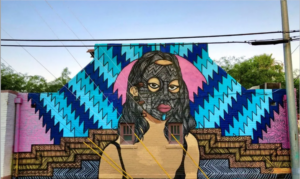
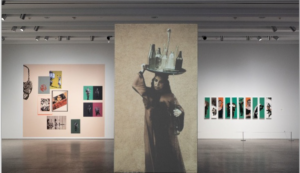
As mentioned above, Arizona’s public universities represent a third major source of arts support in the state. For example, the Herberger Institute for Design and the Arts at ASU provides millions annually in grants and research awards through the Creative Constellation and Design and Arts Corps programs. Similarly, the U of A supports arts programming and interdisciplinary creative research through programs such as the Arts Research + Resilience Grants, Catalyst Grants for Creative Scholarship, and Mellon Foundation-supported initiatives administered through the Confluencenter for Creative Inquiry.
Outside of public support, Arizona’s arts sector relies heavily on private community investments to maintain its momentum. An example of this support is the contributions from Bob Ravenscroft, founder of Music Serving the Word. His investments into the ASU Jazz Studies program, alongside the funding of Ravenscroft Scholarship recipients, have provided financial stability and new learning opportunities for incoming college musicians while ensuring that the arts remain an important part of Arizona’s future.
The Arts and the Economy
Arizona’s arts ecosystem is not only a central piece of the state’s cultural identity, it also plays a meaningful role in creating and supporting economic activity across the state. Analysis of 2,155 arts, culture, and humanities nonprofits in the state via Cause IQ shows these institutions generate more than $1 billion in revenue annually and employ more than 8,300 employees, an employment level exactly half the size of the state’s fast-growing mining sector. On a per-capita basis, these institutions generate revenues of around $141 per resident, or about $368 per resident aged 25-54.
The Bureau of Economic Analysis (BEA) publishes data on the total value added by the arts and culture sector by state. According to the most recent data, Arizona’s arts and culture sector contributed $15.8 billion to the state’s economy in 2023, a level approaching 3% of total GDP in the year. Although this figure includes economic activity from a wide range of industries, including those that support the arts both directly and indirectly, the overall figure demonstrates the relationship the arts sector shares with the overall economy.
Arizona’s Arts Sector in a National Context
BEA also publishes data on “core arts and cultural production,” which includes value-added data for performing arts companies, independent artists, museums, architectural services, interior design, graphic design, and other core facets of arts production. This subset provides a more direct measure of the arts sector itself.
As of 2023, Arizona’s core arts industries generated nearly $3.8 billion in value added, ranking 19th among all 50 states and Washington, D.C. Relative to the state’s overall economy, Arizona’s core arts sector generated more than $7 in value added for every $1,000 of state GDP, ranking the state 24th nationally on this measure. However, between 2013 and 2023 Arizona’s core arts value added grew by more than 123%, the fifth fastest growth in the nation over this period. For context, the number one ranking U.S. jurisdiction, the District of Columbia, generated nearly $3.8 billion in value added in 2023, or about $26 for every $1,000 of local GDP. New York state, the second ranking jurisdiction, generated about $19 in annual value add per $1,000 of GDP.
While already rapidly expanding, there are clear signs that Arizona’s arts sector is still developing relative to more established cultural centers. Cultural hubs like New York City and Washington, D.C., have major internationally-recognized orchestras, ballets, and cultural institutions that have operated continuously for a century or more. By contrast, many of Arizona’s flagship organizations date only to the mid-20th century or later.
That shorter history helps explain, at least in part, the state’s thinner nonprofit landscape. According to data from Cause IQ, Arizona ranks 47th in the number of arts and culture nonprofits per capita – well behind leading states such as Massachusetts, New York City, and Washington, D.C. Simply put, Arizona has far fewer arts nonprofits relative to its population than most of the country.
To provide a more complete picture, CSI constructed the Arts Intensity Index, which is an equally weighted index of four performance metrics for arts and culture nonprofit institutions using the same data from Cause IQ, including nonprofit presence, employment per capita, revenue per capita, and assets per capita. On this composite measure, Arizona ranks 41st nationwide, reinforcing the conclusion that the state’s overall arts footprint remains relatively small.
While small in number, Arizona’s nonprofit institutions tend to perform well compared to national peers. Arizona ranks 26th in nonprofit arts revenue per capita, more in line with the BEA value added rankings, indicating that its smaller number of organizations still generate meaningful economic activity. On a per-organization basis, performance is even stronger: Arizona’s arts nonprofits average $494,419 in annual revenue and nearly four employees per organization, ranking 7th and 28th, respectively.
Building on this data, CSI constructed a second index using a similar methodology to the Arts Intensity Index to measure the performance on a per-organization basis for the arts and culture nonprofits in the state. This Arts Nonprofit Performance Index equally weights the average per-nonprofit revenue, employment, and asset value for each state. According to this measure, even after accounting for lower asset levels per organization (43rd), Arizona ranks 25th overall in the performance of its arts and culture nonprofit organizations relative to the rest of the nation. Put simply, while Arizona’s art sector (specifically nonprofits) is smaller relative to the state’s population, individual institutions are productive compared to national peers.
Analysis from other sources points to strength in the Arizona arts sector. Southern Methodist University (SMU) DataArts Arts Vibrancy Index, a comprehensive measure that takes into account arts providers and cultural institutions, demand, spending on arts and cultural programming, and government support, ranks Arizona 27th, placing the state squarely in the middle of the national distribution.
Taken together, this data points to an arts economy that is strong yet still developing. As a result, Arizona’s arts sector remains less prominent than in some other states, especially when compared to the size of the local population. Arizona lacks the density and long-established institutional base of older cultural hubs, but it is growing rapidly and showing clear signs of strength.
Phoenix and the Top 25 U.S. Metros
How does Arizona’s Phoenix Metropolitan Statistical Area (MSA) compare to other large metros across the nation? As the state’s largest metropolitan area, it is home to the vast majority of its arts and cultural institutions, including 10 of the 14 major institutions identified in Figure 1. Nestled within communities throughout the metro area, these institutions provide a wide range of services and entertainment to the local population, serving an estimated two million patrons a year.
Conducting a similar analysis for the top 25 largest metros in the country, CSIs Arts Intensity Index score for the Phoenix-Mesa-Chandler MSA ranks 20 out of 25, a similar result to the 41st overall ranking at the state level. However, once again considering the performance of the individual arts and culture nonprofits in the state, we see that the picture improves markedly. Out of the 25 largest metros in the country, the Phoenix MSA ranks fourth in revenue per nonprofit, and 12th in employees per nonprofit. Combined with assets per nonprofit, the Phoenix MSA’s ranking in the Arts Nonprofit Performance Index climbs to 11th out of 25.
Arts as an Economic Driver?
While arts and culture may be viewed as a luxury good that communities consume more as they become wealthier, there is evidence it may in turn have broader economic benefits for the local economy. By increasing the region’s attractiveness, or “amenity” value, a robust arts and culture sector can attract highly-skilled and/or highly-educated workers, which may in turn drive economic innovation, in migration of more productive, high-paying firms, and in turn overall economic growth.
A first look at a state’s Arts Intensity Index score and its per-capita personal income level reveals a highly positive relationship, meaning that the more significant a state’s arts and culture sector is, the higher the per-capita personal income. A simple regression reveals that a 1% increase in a state’s Arts Intensity Index score is associated with a 0.57% higher per-capita personal income across all 50 states and Washington D.C.
This positive relationship is almost certainly bi-directional, however, meaning that states with higher incomes also tend to have larger art sectors because higher income individuals typically consume more arts related services. For example, analysis from the National Arts Statistics and Evidence-based Reporting Center (NASERC) shows that households earning more than $200,000 a year spent an average of $647 on arts and cultural fees and admissions, compared to just $198 for households earning $70,000 to $99,999.
This consumption pattern also explains why the positive relationship between arts intensity and personal income persists even when looking at growth rates rather than absolute levels—faster income growth will typically generate faster growth in arts spending, making it difficult to determine which factor came first. Arizona serves as a perfect example of this phenomenon; while the state has historically ranked near the bottom in per-capita personal income (and also near the bottom in arts intensity), it saw the fourth largest improvement in its per-capita personal income between 2013 and 2023, the same period in which the state’s core arts and culture value added saw the fifth fastest growth.
In short, while a robust arts and cultural sector within a state likely influences the local economy, and specifically the per-capita income in that area, it is just as likely that the level of per-capita income increases the local arts and culture sector.
To evaluate this relationship more in depth, CSI constructed a panel dataset covering every state and Washington D.C., with annual data on per-capita personal income and the core arts share of total value added from 2001 to 2023. This panel structure permits the controlling for state-specific characteristics and common national shocks, including recessions and the COVID-19 pandemic, – that make simple cross-sectional regressions invalid for evaluating this relationship. Using a fixed effects panel regression with a five-year lag on the change in the core art’s share of the economy to address the reverse causality discussed above, we estimate that a one percentage-point increase in a state’s core arts sector share of total value added is associated with approximately $1,700-$2,200 higher per-capita personal income growth five years later.
To illustrate this impact more precisely, the average percentage point change in the core arts share of total value added in 2023 was 0.045 percentage points across all states and Washington D.C. Given our estimates above, this change would translate to per-capita personal income growing on average by an additional $70-$100 five years later.
Although a relatively small impact, this data serves as stronger evidence of the link between a state’s art sector and its local economy.
The estimation method above attempts to address some of the simultaneity and confounding factors naturally present in these types of analyses, but it’s worth discussing the potential issues with investigating any relationship between the arts industry and personal income.
First, as discussed above, wealthier people (and thus wealthier states) typically spend more on arts and culture (this is the pattern observed in Figure 4.). This concern is largely addressed by working within states over time rather than comparing across them, since state fixed effects absorb the persistent level differences in income between states.
Second, as discussed above, periods of faster income growth may drive faster arts sector growth, but the five-year lag structure means we are asking whether arts growth precedes income growth, not whether they move together contemporaneously.
Third, some unobserved factor – broader shifts in industrial composition, human capital investment, or amenity-driven migration – could drive both arts growth and income growth simultaneously, and this potentiality is something we cannot fully rule out.
What the analysis does establish more credibly than simpler comparisons is that the arts-income relationship holds within states over time, is not driven by common national economic conditions, and is directionally consistent with arts activity in some degree leading rather than following economic performance. The evidence is consistent with the arts sector playing a small but positive role in regional economic development, even if the precise causal mechanism remains an open question.
Art’s Total Impact on the Economy
Using the TaxPI+ model from REMI CSI was able to evaluate the direct, indirect, and induced economic activity created by the core arts in Arizona. While BEA provides data on the value added directly related to the arts, it ignores the downstream impacts; the arts sector consumes goods and services from other sectors, and those employed within the arts sector are paid wages which they then spend within the local economy. The combination of these direct, second- and third-order impacts illustrate how much the arts contributes to the local economy.
Drawing on BEA core arts sector value-added data and national value-added ratios by industry, CSI estimates the core arts sector generated $6.6 billion in direct output for the state’s economy in 2025. This direct activity triggered an additional $1.7 billion in indirect output through supply chain and supporting industries, and $10.1 billion in induced output from downstream household and business expenditures. Taken together, the arts sector accounts for an estimated $18.4 billion in total economic output (1.91% of total state output), – equivalent to approximately $11.5 billion (1.98%) in state GDP – while supporting more than 113,000 jobs statewide.
Bottom Line
Although Arizona boasts a diverse and increasingly mature arts sector, its overall footprint remains smaller than that of many peer states. At the same time, the growth of Arizona’s arts sector has closely mirrored the state’s broader economic expansion over the past decade. As Arizona has experienced some of the fastest population, employment, and income growth in the nation, demand for cultural amenities, entertainment, and arts-related experiences has grown alongside it. This relationship reflects the broader connection between economic development and the arts sector: expanding economies create larger audiences, stronger philanthropic capacity, greater public and private investment, and increased demand for creative talent.
The continued expansion of Arizona’s economy, particularly within the Phoenix metropolitan area, therefore presents significant opportunities for further growth within the state’s arts sector.