





September 14, 2026
The Economic Impact of Hunting and Fishing and Its Connection to Amendment 83 – The First in a Two Part Series
Introduction
Colorado voters will be asked this November to consider Amendment 83, an effort to enshrine into the state constitution the right to hunt and fish. About half of U.S. states already protect this right.
This report, the first in a two-part series, estimates the current economic impact of hunting and fishing in Colorado and provides context on Amendment 83’s proposed constitutional right to hunt and fish.
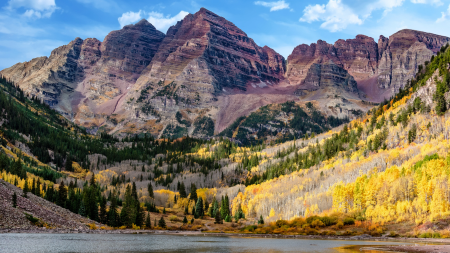
Each year, millions of visitors flock to Colorado to experience its beautiful landscapes, which offer world-class hunting, fishing, skiing, and other outdoor activities. For example, of the approximately 975,000 anglers who will have fished in Colorado in 2026, about 37% (358,000 individuals) will have been nonresidents.[i] The almost 1 million individuals fishing in Colorado this year is complemented by the approximately 305,000 hunters, of which about 89,000 will be nonresidents.[ii] Depending upon what the final figures show at the end of 2026, Colorado may, for the first time, see over 1 million fishing licenses issued in a year.[iii] Although hunters generally spend more money than anglers annual, participation is only about a third of fishing participation.
Figure 1:
Residents enjoy these activities across the state. As Figure 2 shows, according to Colorado Parks and Wildlife (CPW), the Centennial State is home to 1,519 state-operated hunting and fishing access areas. While that number is significant, it does not take into account federal, municipal, county, and private lands and waters unless represented in CPW access layers.
Figure 2:
This report examines the overall economic impact of hunting and fishing (i.e., the landscape of hunting and fishing and the spillover effect it has on Colorado’s economy), covering adult and youth, resident and non-resident interest in big and small game hunting, along with ice, fly, fresh water, and river fishing, among other types of hunting and fishing. The report also looks at the important impact these activities have on the businesses that help meet demand for Colorado’s unique outdoor experiences.
Key Findings
- CPW’s “Wildlife Revenue” generated $220 million in fiscal year (FY) 2024-25 primarily from the sale of hunting and fishing licenses, permits, passes, and fees.
- Depending upon the growth in fishing licenses in 2026, Colorado may, for the first time, see over 1 million fishing licenses in a given year.
- In Colorado, hunting produces:
- $1.2 billion in direct business and service provider sales annually (economic output), employ approximately 8,800 individuals across about 960 business/service providers.
- In Colorado, fishing produces:
- $1.2 billion in direct business and service provider sales annually (economic output), employ about 5,500 individuals across approximately 715 businesses/service providers.
- When including the spillover effects from hunting and fishing, the total economic impact is:
- Over 25,000 employees, including over 23,000 private sector employees.
- Over $6.1 billion in business revenue (i.e., output) to companies/service providers.
- Over $1.5 billion in personal income, including over $1.3 billion in disposable personal income.
Colorado: A Hunting and Fishing Paradise
Hunting in Colorado and Coloradans’ Interest Overall in Hunting
Between July 2025 and July 2026, 61,301 Colorado adults participated in bow hunting, 127,303 hunted with a rifle, and 90,101 hunted with a shotgun.[i] When adding individuals under 18, estimated at around 13% of total hunters, the number of participants grows to 70,461 Coloradans participated in bow hunting, 146,325 hunted with a rifle, and 103,564 hunted with a shotgun.[1]
Figure 3:
Fishing in Colorado and Coloradans’ Overall Interest in Fishing
Colorado’s inland fishing economy spans more than 6,000 miles of streams and more than 1,300 lakes and reservoirs, linking anglers to guides, tackle and boat businesses, hospitality, hatcheries, access infrastructure, and aquatic conservation.[v]
Hatcheries are part of both the recreation product and the conservation system. CPW operates 19 hatcheries and reports producing more than 90 million fish annually for sport fishing opportunity and native species recovery. Private ponds, fee fishing waters, bait production, and aquaculture are related production activities, and also contribute to Colorado’s vibrant fishing business ecosystem.
Environmental Systems Research Institute, Inc. (Esri) reports 430,121 Colorado adults participated in fresh water fishing in the last 12 months as of July 2026, 174,807 participated in salt water fishing (out of state)[2], 65,621 participated in fly fishing, and 162,378 adults watched competitive fishing in the past year.[vi] When adding youth under 18, estimated at around 22% of all anglers, the number of Coloradans participating grows to 554,995 for fresh water fishing, 225,557 for salt water fishing[3], and 84,672 for fly fishing. These are just the resident Coloradans participating in fishing. When adding non-residents, the number of anglers participating in Colorado grows to about 975,000 in 2026. In 2027, the number of individuals participating in angling in the state may surpass 1 million.
Hunting and Fishing Dollars Support Businesses
The broad participation and demand for hunting and fishing leads to a supply network important to Colorado’s economy. Because hunting and fishing are economic activity satisfying consumer demand directly, the direct flow of hunting and fishing-related dollars to large and small businesses acts as a direct effect multiplier, generating thousands of jobs for residents directly and many thousands more indirectly through the network of suppliers and service providers. These direct and indirect employment effects also produce economic gains for households, and a cycle in which the realized household income induces the formation of more households, which in turn buy homes and set up permanent retail and wholesale demand across the state’s economy.
Using direct employment of service providers, wholesalers, retailers, equipment manufacturers, and conservation activities and their associated direct revenue, we estimate hunting and fishing in Colorado directly support almost 15,000 employees (full-time, part-time, contractors, self-employed) and generates more than $2.4 billion annually for nearly 1,700 firms in revenue to small, medium, and large businesses, and as mentioned above, many thousands more indirectly. When adding the spillover effect from hunting and fishing, the total economic impact of hunting and fishing is over $6.1 billion, including 25,000 jobs, and $1.5 billion in personal income.
The Economic Footprint and Connected Impact
The overall economic impact of hunting and fishing is the sum of the direct activity plus the indirect and induced impacts. The following is an analysis of the direct hunting and fishing activities and the businesses, mostly small businesses, that provide services to individuals and groups hunting and fishing in Colorado.
The Demand and Supply: Hunting Activities and the Businesses that Support Them
The Demand Side: Consumer Hunting Activities
| Category | Item | Description |
| Activity | Big game hunting | Elk, mule and white-tailed deer, pronghorn, moose, black bear, mountain lion, Rocky Mountain and desert bighorn sheep, and mountain goat |
| Activity | Wild turkey hunting | Spring and fall turkey seasons on public and private land |
| Activity | Upland game bird hunting | Pheasant, quail, dusky grouse, mountain sharp-tailed grouse[4], greater sage-grouse[5], ptarmigan and chukar |
| Activity | Waterfowl hunting | Ducks, geese and coots on reservoirs, rivers, wetlands and agricultural lands |
| Activity | Migratory bird hunting | Dove, band-tailed pigeon, sora and Virginia rail, snipe, crow and sandhill crane where authorized |
| Activity | Small game hunting | Rabbit, hare, squirrel and other regulated small-game species |
| Activity | Predator and furbearer hunting | Coyote, bobcat, fox, badger, beaver, muskrat, raccoon and other regulated furbearers |
| Activity | Trapping | Regulated take of eligible furbearers using legal trapping methods |
| Activity | Falconry / hawking | Licensed hunting of eligible game using trained raptors |
| Activity | Archery / bowhunting seasons | Method-restricted seasons spanning big game, turkey and some small game |
| Activity | Muzzleloader seasons | Primitive-firearm big-game seasons and related preparation |
| Activity | Youth, novice and apprentice hunting | Youth seasons, outreach licenses, hunter education and apprentice certificates |
| Activity | Limited-license draws and preference points | Primary/secondary draws, applications, preference points, leftover and reissued licenses |
| Activity | Private land access programs | Ranching for Wildlife, Walk-In Access, Bighorn Sheep Access and private leases[6] |
| Activity | Public land and state wildlife area hunting | Hunting on federal lands, state wildlife areas, participating state trust lands[7] and selected state parks |
| Activity | Recreational and target shooting | Rifle, pistol, shotgun, trap, skeet, sporting clays and archery practice |
| Activity | Shed antler gathering | Seasonally regulated collection of naturally shed antlers on public lands |
Table 1
The Supply Side: Businesses/Service Providers to Hunters
As noted in a previous section, a wide range of small to large Colorado-based businesses support hunters and anglers in the state. The extensive network extends far beyond guides and sporting goods retailers. Hunting-related revenue flows to outfitters, backcountry packers, shooting ranges, firearms and ammunition manufacturers, wholesalers, archery and optics companies, taxidermists, game processors, lodging providers, restaurants, fuel stations, apparel retailers, vehicle dealers, and hunting-dog services.
Hunting also supports rural landowners through access fees and leases, along with real estate professionals, insurers, outdoor media companies, mapping and technology providers, and wildlife-diagnostic laboratories. Habitat contractors, conservation nonprofits, and public wildlife agencies contribute access, research, education, habitat management, licensing, and enforcement.
| Category | Item | Description |
| Business sector | Hunting guide and outfitter services | Registered outfitters, guides, trip planning, camps and field services |
| Business sector | Pack animals, livestock and backcountry support | Horse/mule rental, packing, farriers, feed, veterinary and stable services |
| Business sector | Shooting and archery ranges | Practice, sight-in, hunter education, competitions and instruction |
| Business sector | Sporting goods and firearms retail | Firearms, ammunition, archery gear, packs, optics, calls and hunting supplies |
| Business sector | Firearms manufacturing | Rifles, shotguns and other small arms |
| Business sector | Ammunition manufacturing | Small-arms ammunition and components |
| Business sector | Sporting goods wholesale distribution | Wholesale distribution of hunting equipment and supplies |
| Business sector | Taxidermy services | Preparation, preservation and mounting of game trophies |
| Business sector | Custom meat and game processing | Cutting, wrapping, freezing, sausage-making and storage of harvested game |
| Business sector | Lodging and hunting camps | Hotels, motels, cabins, ranch stays, campgrounds and short-term rentals |
| Business sector | Restaurants, groceries, fuel and convenience retail | Meals, provisions, gasoline and diesel purchased during hunting trips |
| Business sector | Hunting apparel and footwear retail | Camouflage, technical layers, boots, gloves and weather protection |
| Business sector | ATV, UTV and off-road vehicle dealers and service | Vehicles, trailers, parts, repair and rentals used for access |
| Business sector | Hunting dog training, boarding and veterinary care | Training, kennel, breeding, boarding and animal-health services |
| Business sector | Private land access and ranch recreation | Fee access, leases, trespass fees and ranch-hosted hunting |
| Business sector | Commercial hunting, trapping and game preserves | Market-oriented hunting/trapping and commercial preserves |
| Business sector | Wildlife habitat, forestry and land management | Habitat improvement, invasive-plant treatment, water development and consulting |
| Business sector | Archery equipment manufacturing and retail | Bows, arrows, broadheads, targets and accessories |
| Business sector | Optics, mapping and outdoor electronics | Riflescopes, binoculars, rangefinders, GPS, satellite communicators and mapping subscriptions |
| Business sector | Conservation and wildlife nonprofit organizations | Habitat projects, access, research, education and advocacy |
| Business sector | Wildlife agency administration and research | CPW wildlife management, licensing, enforcement, biology, access and federal restoration programs |
| Business sector | Hunting property real estate and land services | Brokerage, appraisal and management of ranch and recreation properties |
| Business sector | Outdoor media, publishing and digital services | Hunting publications, video, podcasts, apps, maps and subscription content |
| Business sector | Guide, outfitter and event insurance | Liability, property and commercial coverage |
| Business sector | CWD testing and wildlife diagnostic services | Sample collection, laboratory testing, transport and related services |
Table 2
The Direct Economic Impact of Hunting
Based upon the share of economic activity of relevant North American Industry Classification (NAICS) codes, revenue to employer and nonemployer businesses directly connected with Colorado-based hunting will likely reach more than $1.2 billion in 2026 and grow to $2.1 billion by 2035. The table in Appendix B presents a full breakdown of the revenue, jobs, and wages for hunting-related activity. The following figure offers a summary.
Figure 5:
The Demand and Supply: Fishing Activities and the Businesses that Support Them
The Demand Side: Consumer Fishing Activities
Colorado fishing encompasses a wide range of individual and group activities across rivers, streams, lakes, reservoirs, and private waters. Anglers fish for coldwater species such as trout and kokanee salmon, as well as warmwater and coolwater species including bass, walleye, crappie, perch, catfish, and pike. Participation ranges from fly fishing, ice fishing, bowfishing, and shoreline or accessible fishing to motorboat, kayak, canoe, float tube, and paddleboard angling. Organized activities include guided and instructional trips, youth and family clinics, fishing tournaments, derbies, and community events. These recreational opportunities are supported by public hatcheries and fish stocking programs, native species recovery work, and private ponds, fee fishing waters, and aquaculture operations.
| Category | Item | Description |
| Activity | Coldwater lake and reservoir fishing | Trout, kokanee salmon, Arctic char and other coldwater species |
| Activity | River and stream trout fishing | Wade, bank and float fishing in freestone and tailwater systems |
| Activity | Warmwater and coolwater fishing | Bass, walleye, saugeye, crappie, perch, catfish, pike and other species |
| Activity | Fly fishing | Artificial-fly angling in rivers, streams, lakes and reservoirs |
| Activity | Ice fishing | Winter angling through lake and reservoir ice |
| Activity | Boat-based reservoir fishing | Fishing from motorboats, pontoons and other watercraft |
| Activity | Kayak, canoe, float-tube and paddleboard fishing | Human-powered and small-craft fishing access |
| Activity | Bank, pier and accessible fishing | Shoreline, fishing-pier and universally accessible angling |
| Activity | Guided fishing and instructional trips | Commercial walk-wade, float, lake and reservoir fishing trips |
| Activity | Youth, family and learn-to-fish programs | Free fishing events, clinics and mentored angling |
| Activity | Fishing tournaments and derbies | Organized bass, walleye, trout, ice-fishing and community events |
| Activity | Bowfishing | Archery-based take of eligible nongame fish |
| Activity | Fish stocking and hatchery production | Public propagation, rearing and stocking for sport fisheries and native recovery |
| Activity | Private pond, fee-fishing and aquaculture operations | Privately managed fishing water, stocking and fish production |
Table 3
The Supply Side: Businesses/Service Providers to Anglers
Colorado’s fishing economy supports a broad network of businesses and organizations serving anglers before, during, and after their trips. These businesses include fishing guides and outfitters, fly shops and tackle retailers, equipment manufacturers and wholesalers, marinas, boat and paddlecraft dealers, rental companies, repair services, electronics suppliers, and fishing-apparel retailers. Angler travel also generates revenue for lodging, campgrounds, restaurants, grocery stores, fuel stations, and other businesses near fishing destinations.
Additional activity flows to hatcheries, bait and private fish producers, habitat restoration contractors, access infrastructure builders, conservation nonprofits, event organizers, insurers, media and mapping services, real estate firms, and public agencies responsible for fisheries management, stocking, research, enforcement, and aquatic-nuisance-species control.
| Category | Item | Description |
| Business sector | Fishing guide and outfitter services | Guided walk-wade, float, lake and reservoir trips plus casting instruction |
| Business sector | Fly shops, bait and tackle retailers | Tackle, flies, bait, licenses, clothing and local information |
| Business sector | Fishing tackle and equipment manufacturing | Rods, reels, flies, lures, line, nets and related gear |
| Business sector | Sporting goods wholesale distribution | Wholesale supply of tackle, boats and related recreation goods |
| Business sector | Marinas, docks and launch services | Slips, storage, launching, rentals and marina services |
| Business sector | Boat, paddlecraft and trailer dealers | Sales of fishing boats, kayaks, canoes, pontoons and trailers |
| Business sector | Boat building, repair and marine service | Watercraft construction, engines, maintenance and winterization |
| Business sector | Watercraft and fishing-equipment rental | Boats, kayaks, canoes, paddleboards and fishing gear |
| Business sector | Marine electronics and specialty outdoor technology | Fish finders, sonar, trolling motors, GPS and navigation systems |
| Business sector | Fishing apparel, waders and footwear | Waders, boots, technical clothing, gloves and weather gear |
| Business sector | Lodging and campgrounds near fishing destinations | Hotels, motels, cabins, guest ranches, campgrounds and short-term rentals |
| Business sector | Restaurants, groceries, fuel and convenience retail | Food, provisions and transportation fuel for angler trips |
| Business sector | Fish hatcheries and stocking contractors | Public and private propagation, rearing, transport and stocking |
| Business sector | Live bait and private fish production | Minnows, worms and other bait; pond and stocking fish |
| Business sector | Aquatic habitat, river restoration and environmental consulting | Stream restoration, habitat structures, water-quality and fisheries biology |
| Business sector | Boat ramps, fishing piers and access construction | Construction and maintenance of ramps, docks, piers and access facilities |
| Business sector | Aquatic nuisance species inspection and decontamination | Watercraft inspection, cleaning equipment and seasonal staffing |
| Business sector | Fishing conservation nonprofit organizations | Habitat, access, native-fish recovery, education and advocacy |
| Business sector | Fisheries agency administration, science and enforcement | CPW licensing, hatcheries, stocking, surveys, access, enforcement and federal restoration programs |
| Business sector | Waterfront and recreation-property real estate | Brokerage and management of river, lake and reservoir-area property |
| Business sector | Outdoor media, publishing, mapping and digital services | Fishing publications, video, apps, maps, forecasts and subscription content |
| Business sector | Guide and outfitter insurance | Liability, property and commercial policies |
| Business sector | Tournament, event and club services | Event administration, permits, timing/weigh-in, sponsorship and venues |
Table 4
The Direct Economic Impact of Fishing
A prior study done by the American Sportfishing Association looking at the economic impact of Colorado’s fishing industry showed an estimated 686,390 resident and nonresident anglers, $2.0 billion spent while fishing, 15,406 jobs supported, $861 million in income, $1.4 billion in GDP, $215 million in state and local taxes, and a $2.5 billion total multiplier effect.[i],[ii]
This study takes a micro approach, starting from the detailed activities’ employment, revenue, and firms in 2026, CSI estimated the overall direct impact of hunting and fishing from the details identified in Appendix B. A summary of our findings follows in the figure below. Overall, using this approach CSI estimates that fishing in Colorado supports nearly $1.2 billion in direct revenue to 718 companies that sustain 5,495 direct jobs. These are just the direct revenue and employment figures, which are not directly comparable to the previous study by the American Sportfishing Association. In the “Total Economic Impact” section that follows, it presents the direct impact plus the positive spillover effects from hunting and fishing. These results would be more comparable to the prior study.
Figure 6:
Total Direct Economic Impact from Hunting and Fishing
Overall, just the direct economic impact from hunting and fishing together is over $2.4 billion when measured by company and service provider revenue for 1,681 firms and 14,766 jobs. The second part of this analysis, detailed in the following section, presents the broader economic impact from the linkages hunting and fishing creates in the state.
Figure 7:
Total Economic Impact – Direct, Indirect, Induced, Amenity, and Quality of Life from Hunting and Fishing
Up to this point, the focus has been on the direct economic impact. When someone comes to Colorado to hunt, they not only are committing to purchasing a hunting license, but are buying from a fish and tackle shop in Craig or a hotel owner in a rural area. This has a disproportionate impact on rural areas of the state.
Overall Economic Impact
When accounting for this spillover effect on businesses providing service/equipment/material to hunters and anglers, the total economic impact is much larger. Using REMI Tax PI+ as the modeling system, CSI modeled the complete economic impact of hunting and fishing. Appendix C contains details of the modeling assumptions. Overall, hunting and fishing:
- Generate over 25,000 jobs in the state, including over 23,000 private sector employees.
- Result in over $6.1 billion in revenue to businesses/service providers.
- Boost personal income by over $1.5 billion, including over $1.3 billion in disposable income.
- Bring almost 8,000 people to Colorado to live permanently.
Figure 8:
Jobs Economic Impact
As wide as the hunting and fishing sector is, it touches many job types. Unsurprisingly, the two top impacted sectors from hunting and fishing are conservation and fishing/hunting workers. Other highly impacted occupations include motor vehicle operators (i.e., drivers to hunting and fishing locations), construction trade workers (i.e., infrastructure), material moving workers, business operations specialists, other management occupations, other office and administrative support workers, and top executives. The count of top executives may seem odd, but the hunting and fishing has many small, often sole proprietor companies whose only employees is – top executives.
Figure 9:
Direct Payments to State/Local Governments for Hunting and Fishing Licenses and Fees
In addition to the economic activity mentioned up to this point, governments generate revenue for conservation and oversight activities from hunters and anglers. In fact, Colorado Parks and Wildlife (CPW) gets 68% of its annual wildlife revenue from licenses, passes, fees, and permits. The total wildlife revenue in FY 2024-25 was $220 million, as shown in the following figure.[ix]
Figure 10:
The number of hunting and fishing license holders has generally trended up in recent years. In 2025 there were nearly 874,000 fishing license holders and more than 378,000 hunting license holders.
Figure 11:
Prevalence of Hunting and Fishing Compared to Other States
More than 14,000 Coloradans work in hunting and fishing to meet the needs of consumers. Colorado ranks in the top 20 nationally for the sales of both hunting and fishing licenses. According to Ammo.com, for 2026 Colorado ranked 19th in hunting licenses sold and 11th in fishing licenses sold.[x] The following map compares the rate of hunting and fishing licenses sold per state compared to that state’s population.
Figure 12:
Amendment 83
Given the importance of hunting and fishing to Colorado’s economy, conservation group International Order of Theodore Roosevelt (IOTR) qualified Amendment 83, formerly Initiative 302, to be on this year’s statewide ballot.[xi] The initiative seeks to codify the right of residents to fish and hunt into the Colorado state constitution.
This initiative arises during an era of debate around wildlife management in the state. Prior proposals, such as Initiative 91, aimed to ban the hunting and harvesting of mountain lions, while others, like Ordinance 308, attempted to ban the sale of fur products in Denver. Although neither initiative passed, they received significant public attention, leading to the current effort to prevent such perennial attempts to change hunting and fishing laws.
The initiative is broken down into four main components[xii]:
- Establish a constitutional right of the people of Colorado to hunt, fish, and take fish and wildlife.
- Specify hunting and fishing as the preferred means of managing fish and wildlife populations.
- Ensure no trespass on private property or changes to property rights.
- Maintain the authority of state agencies to manage and regulate wildlife.
Where Would Amendment 83 Place Colorado Among Other States?
Currently, residents in 24 states have the constitutional right to hunt and fish, including many of the states neighboring Colorado.[xiii]
Figure 13:
Recent Proposed Hunting and Fishing Protections Around the Country
During the 2025–26 legislative and election cycle, proposals concerning hunting and fishing rights advanced in Maine, Michigan, and Oregon, but none of these three proposals is currently scheduled for a statewide vote in 2026.
Maine and Michigan lawmakers proposed constitutional amendments protecting the right to hunt and fish. Oregon Initiative Petition (IP) 28, by contrast, proposed removing animal cruelty exemptions in a manner that would prohibit or substantially restrict hunting, fishing, and other uses of animals. Maine’s proposed constitutional amendment, L.D. 820, died when the legislature adjourned on April 29, 2026.[xiv] Michigan’s proposal, House Joint Resolution C, remains pending in a House committee.[xv] Oregon officials determined in July 2026 that IP 28 lacked enough valid signatures to qualify for the November ballot.[xvi]
The following table shows a list of hunting and fishing ballot initiatives that have been, or could still be, considered in 2026.
Bottom Line
Amendment 83 aims to constitutionally ensure the ability to hunt and fish in the state. Even though it is challenging to measure the full economic impact, the hunting and fishing industry provides thousands of jobs in Colorado, billions in revenue to businesses, and millions in revenue to state and local government. Hunting and fishing are also an important part of the state’s culture and have been central to the management and maintenance of healthy wildlife populations since statehood.
Appendix A: Steps for Direct Estimates
Because hunting and fishing activity crosses numerous statistical categories (known as NAICS classifications), CSI took steps to eliminate potential double counting and arrive at a reasonable share of a NAICS-sector economic activity measure for the given hunting and fishing-related activity. The steps were as follows:
- Download the 2017 Economic Census for Colorado
- Download the 2022 Economic Census for Colorado
- Combine the 2017 and 2022 Economic Censuses
- Project forward to 2026 using the growth rate between 2017 and 2022.
- Left join the Economic Census data with the activities and business sector delineation presented in the main body of the report.
- Estimate the share of the NAICS-sector activity associated with the identified hunting of fishing activity or business service. Estimating the share of NAICS-sector level estimates was done via the methods detailed below (Appendix A – Estimating Shares).
Appendix A – Assumed Shares / Dollar Values
Because most of the NAICS-level detail for jobs, revenue, and firms includes activity not directly connected with hunting or fishing, a share of these total figures were estimated or assumed to be related to hunting and/or fishing. The assumptions are detailed in Appendix B. Further research may change these estimates.
Appendix B: Details Behind Direct Hunting and Fishing Economic Activity (Jobs, Revenue, and Number of Firms)
Hunting Direct Economic Impact Estimates
| Colorado-Related Direct Economic Impact – Hunting, 2026 | ||||
| NAICS/ activities and business service providers | Jobs | Revenue | Firms | Notes |
| 114210 – Hunting and Trapping | 2,539 | $66,031,019 | 749 | Direct sector estimates |
| 713990 – Youth/novice hunting services, recreational and target shooting, hunting guide and outfitter services, shooting/archery ranges/taxidermy services | 924 | $50,259,910 | 42 | The sum of jobs/revenue/firms providers across multiple activities/providers. Assumed to be 5% of total for the sector. |
| 924120 – Administration of Conservation Programs | 1,242 | $95,000,000 | No estimate | State/local government. Direct jobs estimated using REMI from projected $95 m 2026 revenue. A separate estimate from Revelio Labs (https://www.reveliolabs.com/companies/cpw/employees) suggests the total is 917. |
| 531190 – Private land access programs and ranch recreation | 14 | $9,580,947 | No estimate | Estimated at 1%. Most of this NAICS sector is dominated by unrelated property leasing. Revenue is fee revenue, not transaction volume upon which the fee revenue is based. |
| 459110 – Sporting goods retailers | 1,762 | $368,305,650 | 95 | Estimated at 15%. Hunting is a meaningful part of sporting goods and firearms retail. |
| 332994 – Firearms manufacturing | 8 | $3,819,518 | 5 | Estimated at 15%. Most of the sector is assumed to be manufacturing for non-hunting purposes, including policy, security, and out-of-state demand. |
| 332992 – Ammunition manufacturing | 2 | $1,801,500 | No estimate | Estimated at 15%. Most of the sector is assumed to be manufacturing for non-hunting purposes, including policy, security, and out-of-state demand. |
| 423910 – Sporting and recreational goods and suppliers merchant wholesalers/hunting supplies | 270 | $167,639,445 | 16 | Hunting supplies are estimated at 10%. Because companies in this sector are wholesale suppliers, they are excluded from the direct impact estimate because they show up as indirect (supplier network). |
| 311612 – Custom meat and game processing | 123 | $155,088,768 | 2 | Estimated at 5%. Wild game cutting is seasonal and small relative to commercial livestock slaughtering and meat processing. |
| 721110 – Lodging associated with hunting camps and hunting generally | 686 | $157,324,938 | 21 | National surveys put the figure at 2%. The number of firms is a share of total firms at 2%, although no lodging provider specifically only serves hunters. |
| 722511 / 722513 / 445110 / 457110 – Restaurants, groceries, fuel and convenience retail | 18 | $36,039,440 | No estimate | Assumes $150 per hunter per trip. The number of individuals hunting stems from Esri Business Analyst reported earlier in this report. Direct employment is derived from a REMI simulation on revenue for the sectors. The model assumes 25% of the hunters are involved in more than one type of hunting activity (https://www.fws.gov/program/national-survey-fishing-hunting-and-wildlife-associated-recreation-fhwar). |
| 458110/459110 – Camouflage, technical layers, boots, gloves, and weather protection | 951 | $120,131,466 | No estimate | Assumes $500 per hunter per year. The number of hunters is derived as detailed above. https://www.fws.gov/program/national-survey-fishing-hunting-and-wildlife-associated-recreation-fhwar and https://www.fishwildlife.org/afwa-informs/national-survey. Modeled employed are derived from a REMI Tax PI+ simulation. |
| 441227 – ATV, UTV and off-road vehicle dealers and service | 2 | $33,658,260 | No estimate | Assumes 3% with most ATVs and UTVs supporting non-hunting use. |
| 812910 – Hunting dog training, boarding and veterinary care | 244 | $10,210,320 | 16 | Assumes 2% of pet grooming/training, boarding, and sitting is related to hunting. |
| 541620 – wildlife habitate, forestry, and land management | 103 | $32,536,632 | 12 | Assumes 3% of sector revenue is related to hunting. |
| 339920 – Archery equipment manufacturing and retail | 83 | $10,874,896 | 7 | Assumes 15% related to Colorado-specific demand. |
| 334511 – Optics, mapping, outdoor electronics, riflescopes, binculars, rangefinders, GPS, satellite communicators, and mapping subscriptions | 7 | $2,173,740 | No estimate | Assumes 1% of sector measures are Colorado-specific hunting demand related. |
| 813312 – Conservation and wildlife organizations, habitat projects, access, research, education, and advocacy | 173 | $30,880,842 | 14 | Assumes 5% based upon the fact that some environmental and conservation groups focus on habitat and access related to hunting. |
| 513120/516210 – Outdoor media, publishing and digital services | No estimate | $26,030,830 | No estimate | Assumes 1%. Hunting media and mapping are niche products within brand periodicals and digital media activity. |
| Total Direct Jobs, Revenue, and Firms | 8,879 | $1.2 billion | 963 | |
Fishing Direct Economic Impact Estimates
| Colorado-Related Direct Economic Impact – Fishing, 2026 | ||||
| NAICS/activities and business service providers | Jobs | Revenue | Firms | Notes |
| 114110 – Coldwater lake and reservoir fishing, river and stream trout fishing, warmwater and coolwater fishing, fly fishing, ice fishing, boat-based reservoir fishing, float-type (kayak, canoe, paddleboard) fishing, guided fishing, youth and family fishing programs, bowfishing | 1,650 | $28,973,143 | 487 | Direct sector estimates |
| 112511 – Fish stocking and hatchery production, private pond, fee fishing, and aquaculture operations | 29 | $24,586,680 | No estimate | Uses 2023 Census of Aquaculture for the United States with the share related to to Colorado at 3%, which is above the population share because of Colorado’s wider reach of its outdoors sector. |
| 713990 – Fishing guide and outfitter services | 924 | $50,259,910 | 42 | The sum of jobs/revenue/firms providers across multiple activities/providers. Assumed at 5% of total for the sector. |
| 459110 – Fly shops, bait and tackle retailers | 1,762 | $368,305,650 | 95 | Estimated at 15%. Fishing is a meaningful part of sporting goods retail. |
| 339920 – Fishing tackle and equipment manufacturing | 111 | $14,499,861 | 9 | Assumes 20%. Includes rods, reels, lures, and related gear. Most sporting goods manufacturing is non-fishing related. |
| 423910 – Wholesale supply of tackle, boats, and related recreation goods | 270 | $167,639,445 | 16 | Assumes 10%. Because companies in this sector are wholesale suppliers, they are excluded from the direct impact estimate because they show up as indirect (supplier network). |
| 713930 – Marinas, docks, and launch services, covering slips, storage, launching, rentals, and marinas services | 22 | $4,052,998 | 4 | Assumes 25% of sector activity. Marinas directly enable boating and fishing, but many slips, launches, storage services, and rentals service non-angling boating. |
| 441222 – Boat, paddlecraft and trailer dealers. | 33 | $51,124,028 | 10 | Assumes 15% as fishing motivates some boat and paddlecraft purchases. |
| 336612 / 811490 – Boat building, repair and marine service, including watercraft construction, engines, maintenance and winterization which supports reservoir and river-based fishing | 32 | $8,560,960 | 3 | Assumes 15% of boating building sector and 1% of maintenance and repair (811490) sector. |
| 532284 – Watercraft and fishing equipment rental, such as boats, kayaks, canoes, paddleboards, and fishing gear | 96 | $15,793,906 | 28 | Assumes 5% of the sector. |
| 334511 – Marine electronics and specialty outdoor technology, such as fish finders, sonar, trolling motors, GPS and navigation systems | 13 | $4,347,481 | No estimate | Assumes 2% for fish finders and trolling systems because the sector is focused much more on aviation, defense, surveying, industrial, and scientific uses. |
| 458110 – Fishing apparel, waders and footwear, including waders, boots, technical clothing, gloves, and weather gear | 51 | $11,240,140 | No estimate | Assumes 0.25% since fishing apparel is a niche sector to much broader consumer demand captured in the sector. |
| 721110 / 721199 / 721211 – Lodging and campgrounds near fishing destinations | 426 | $91,160,313 | 14 | Assumes 1% of the sector. |
| 722511 / 722513 / 445110 / 457110 – Restaurants, groceries, fuel and convenience retail for angler trips | No estimate | $405,175,039 | No estimate | Assumes 0.8% of the sector. |
| 112990 – Live bait and private fish production, including minnows, worms and other bait, pond and stocking fish | No estimate | $1,946,755 | No estimate | Assumes $3 per fishing participant and a 25% overlap among participants by type of fishing. |
| 813312 – Fishing conservation, habitat, access, native-fish recovery, education and advocacy | 346 | $61,761,684 | 28 | Assumes 10% of the sector. |
| 513120/516210 – Outdoor media, publishing and digital services | No estimate | $26,030,830 | No estimate | Assumes 1% of the sector. |
| 924120 – Administration of Conservation Programs | 392 | $30,005,588 | No estimate | State/local government. Direct jobs estimated using REMI from projected $30m 2026 revenue. A separate estimate from Resilio Labs suggests 917 for CPW (https://www.reveliolabs.com/companies/cpw/employees) |
| Total Direct Jobs, Revenue, and Firms | 5,887 | $1.2 billion | 718 | |
Appendix C: Modeling the Spillover Effects from the Hunting and Fishing Industry
To model the spillover effects of Colorado’s hunting and fishing industry, CSI employed the following sectors/assumptions with the REMI Tax PI+ version 3.3.0 (build 6856).
- The model began with the direct estimates for revenue and jobs, which are reported in Appendix B.
- For simplicity, the final model presented in this report uses REMI’s employment variable for the “Fishing, hunting and trapping” subindustry as the most closely representative sector for this study. REMI’s industry detail for “Fishing, hunting and trapping” does not completely match the sector breakdown shown in Appendix B. Because it is impossible to make REMI’s default assumptions match the micro estimates in Appendix B, this study used the simplest form – employment in the “fishing, hunting and trapping” sector.
- The amount entered into REMI was not the full 14,766 employment estimate in Appendix B. Two reasons for this:
- First, only a portion of the hunters and anglers in the state are bringing money into the state. The model assumes 29% of hunters and 37% of anglers are nonresidents.
- Second, fishing and hunting are demanded by residents. If fishing and hunting were to be prohibited, residents’ demand would be met by going out of state, taking their spending power with them. The model assumes 50% of residents would continue to hunt and fish, but do so out of state.
For these two reasons, the direct employment effect entered into REMI was 29% of hunting employment and 37% of fishing employment to account for nonresidents and 50% of hunting and fishing employment for residents.
Footnotes
[1] The share of participants that are youth under 18, here assumed as 13%, may differ slightly by type of hunting, such as between rifle and shotgun. Shotguns may often be introduced earlier because they are used for close-range hunting such as small game, turkey, and some deer hunting. Youth programs and supervised hunting traditions also commonly use shotguns. Rifles are generally more associated with longer-range big-game hunting, where greater judgment about distance, target identification, and backstop safety is important, and therefore participation may skew older.
[2] Salt water fishing is unavailable in Colorado. This figure represents Coloradans going to Florida, California, Hawaii, and other places with salt water fishing.
[3] Ibid
[4] The plains sharp-tailed grouse is state endangered (https://cpw.state.co.us/sites/default/files/dam/dmimiqhw2j/ch-w-10-as-approved_may-2022.pdf).
[5] The Gunnison sage-grouse is currently not huntable (https://www.sos.state.co.us/CCR/GenerateRulePdf.do?ruleVersionId=7043) .
[6] Colorado resident only (https://cpw.state.co.us/sites/default/files/dam/erjzbk48be/colorado-big-game-hunting-brochure.pdf).
[7] Around 973,000 acres of state trust lands are enrolled in the CPW access program (https://cpw.state.co.us/stl-finder).
Endnotes
[i] Common Sense Institute (CSI) analysis based on data from Esri ArcGIS Business Analyst and Colorado Parks and Wildlife (CPW).
[ii] Ibid
[iii] Common Sense Institute (CSI) forecast based on licensing information reported in Colorado Parks and Wildlife’s (CPW) annual report.
[iv] Esri, “ArcGIS Business Analyst,” accessed August 24, 2026, https://www.esri.com/en-us/arcgis/products/arcgis-business-analyst/overview.
[v] Colorado Parks and Wildlife, “Fishing,” accessed August 24, 2026, https://cpw.state.co.us/fishing.
[vi] Esri, “ArcGIS Business Analyst.”
[vii] American Sportfishing Association, “Economic Impacts of Recreational Fishing: Colorado,” accessed August 24, 2026, https://asafishing.org/state-reports/economic-impacts-of-recreational-fishing-colorado/.
[viii] Southwick Associates, Colorado Sportfishing Economics.
[ix] Colorado Parks and Wildlife, “Funding Colorado Parks and Wildlife,” accessed August 24, 2026, https://cpw.state.co.us/funding-colorado-parks-and-wildlife#4257225834-2043701162.
[x] Ammo.com, “U.S. Hunting & Fishing Statistics (2026 Data),” accessed August 24, 2026, https://ammo.com/research/hunting-fishing-statistics.
[xi] Colorado Secretary of State, Proposed Initiative 2025–2026 #302: Final Text (April 2, 2026), https://www.sos.state.co.us/pubs/elections/Initiatives/titleBoard/filings/2025-2026/302Final.pdf.
[xii] Ibid
[xiii] National Conference of State Legislatures, “State Constitutional Right to Hunt and Fish,” updated November 11, 2025, https://www.ncsl.org/environment-and-natural-resources/state-constitutional-right-to-hunt-and-fish/quot.
[xiv] Maine Legislature, L.D. 820 (H.P. 527), Resolution, Proposing an Amendment to the Constitution of Maine to Establish the Right to Hunt and Fish, 132nd Leg., 1st Reg. Sess. (2025), https://legislature.maine.gov/legis/bills/getPDF.asp?paper=HP0527&item=1&snum=132.
[xv] Michigan Legislature, H.J.R. C, 103rd Leg., Reg. Sess. (2025), https://www.legislature.mi.gov/Bills/Bill?ObjectName=2025-HJR-C.
[xvi] Oregon Secretary of State, Initiative Petition 28, People for the Elimination of Animal Cruelty Exemptions (PEACE) Act (2026), https://sos.oregon.gov/admin/Documents/irr/2026/028text.pdf.
RECENT/RELATED RESEARCH
The Economic Impact of Hunting and Fishing and Its Connection to Amendment 83 – The First in a Two Part Series
The Economic Impact of Hunting and Fishing and Its Connection to Amendment 83 – The First in a Two Part…
Proposition 137: Sporting Goods Sales Tax Revenue for Conservation

Proposition 137: Sporting Goods Sales Tax Revenue for Conservation Introduction Proposition 137 would exempt existing state sales tax revenue on…

Proposition 132: Increasing Opioid Penalties

Introduction When Colorado voters take to the polls this November, one of the measures they will see is Proposition 132,…